

Written by Oliver Freedman, Roamwild USA. Published September 16, 2026.
Short answer: clean seed feeders every two weeks, and weekly in hot or wet weather or whenever you see a sick bird. Scrub off all visible debris first, soak the parts for ten minutes in a 10% bleach solution (1 part household bleach to 9 parts water), rinse thoroughly and let everything dry completely before refilling. Clean hummingbird feeders every time you change the nectar, which in hot weather is every two to three days.
Why the scrub matters more than the soak
Cornell Lab's Project FeederWatch tested three methods on feeders contaminated with Salmonella: scrubbing with soap and water, soaking in dilute bleach, and both. Bleach soaking outperformed soap alone, but the finding that matters most was about debris: feeders that still carried seed residue had more bacteria after cleaning than clean ones whatever the method, and debris-laden feeders washed only with soap and water still carried enough Salmonella to transmit disease. Scrape and scrub first; then disinfect.
The CDC's handling advice
The Centers for Disease Control and Prevention investigated Salmonella outbreaks linked to wild songbirds and feeders. Its guidance: wash feeders and baths outdoors where possible, wear gloves, do not use the kitchen sink (if you must clean indoors, disinfect the sink or tub afterwards), avoid hand-to-mouth contact while working, and wash your hands with soap and water afterwards. Keep pets away from the area under feeders.
Step by step: a Roamwild PestOff feeder
- Empty old seed into the trash, not onto the ground.
- Slide the metal lower collar up the tube to expose the green release lugs, press the lugs and lift the tube away from the lower assembly. No tools are needed; the Help page has a 42-second video.
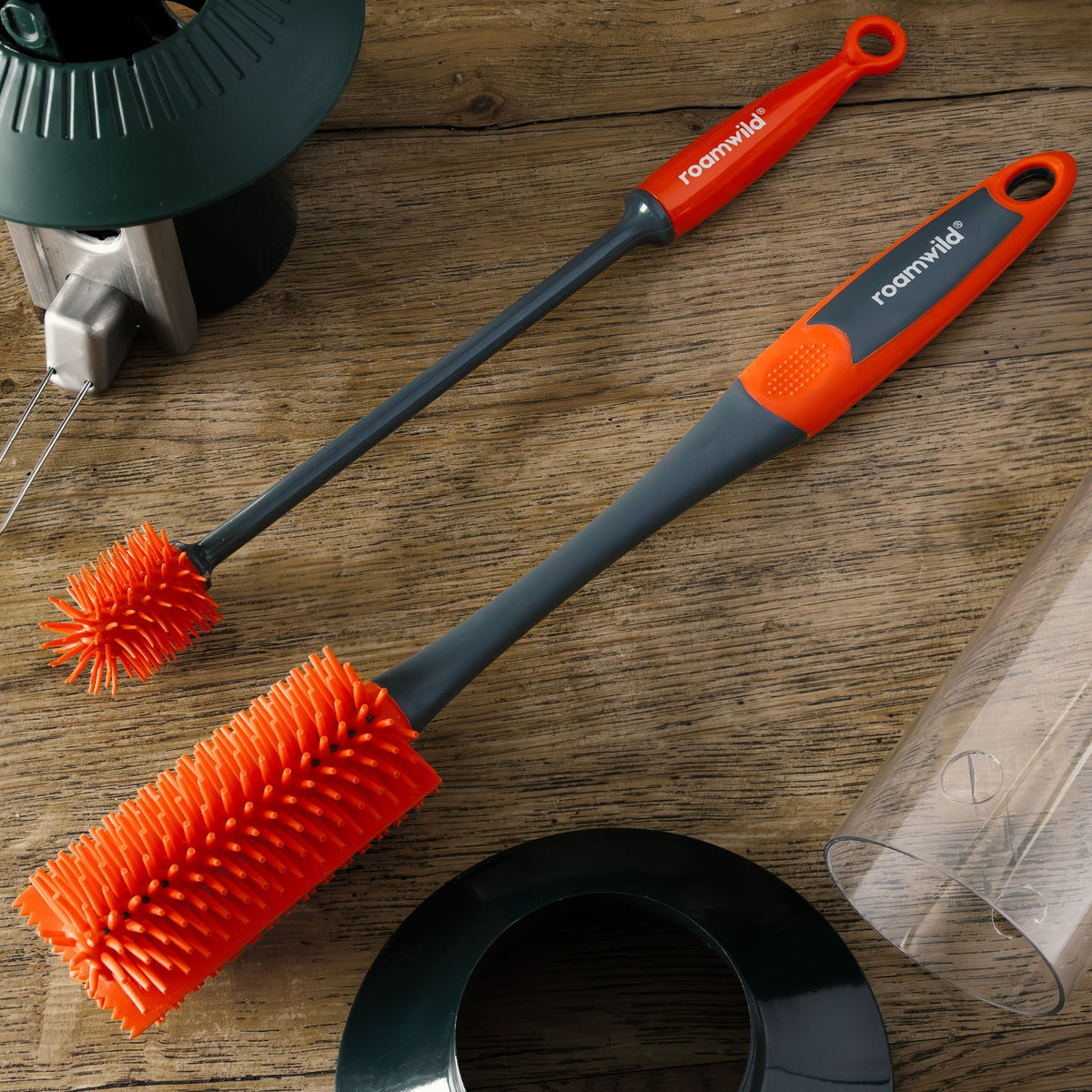
- Soak the lower assembly and tube in hot water for ten minutes, then scrub the ports, perches and rain guard with the small brush from the Roamwild cleaning set until no residue remains.
- Soak all parts for ten minutes in 1 part bleach to 9 parts water.
- Rinse until there is no bleach smell, then dry completely; damp seed molds and jams the mechanism.
- Click the tube back into the lower assembly and refit the anti-squirrel ring before refilling.
Step by step: the Arch Window Feeder
Lift the feeder off its clips, empty it, scrub the tray and arch, bleach-soak, rinse and dry, then clean the glass before pressing the suction cups back on so they seal. Wet, clean glass and warm cups hold best.
Hummingbird feeders
Change nectar every two to three days in hot weather (daily above 90 F) and weekly in cool weather, and rinse the feeder with hot water each time. Once a week take the feeder apart and scrub every surface, including the ports and the ant moats; a twist-off base makes this quick. Use plain sugar water, four parts water to one part white sugar, with no dye, and discard cloudy nectar immediately.
Bird baths
Empty, scrub and refill every two to three days in summer. A solar fountain keeps water moving, which slows algae and stops mosquitoes breeding, but it does not replace scrubbing.
When to take feeders down
If you find a sick or dead bird at the feeder, or state wildlife agencies report an outbreak of salmonellosis or finch conjunctivitis in your area, take feeders and baths down for at least two weeks, clean them thoroughly, and rake up seed and droppings underneath. Report dead birds to your state wildlife agency.
Frequently asked questions
Can I use vinegar instead of bleach?
Vinegar cleans but does not reliably kill Salmonella. Cornell's test used dilute bleach; if you avoid bleach, scrub hard with hot soapy water and dry in full sun.
Is it safe to clean feeders in the dishwasher?
Only if the manufacturer says the parts are dishwasher safe, and never in a load with dishes. Scrape off debris first; a dishwasher does not remove caked seed.
How do I clean the ports on a squirrel proof feeder?
Take the feeder apart and use a small port brush; the mechanism is where damp seed collects. Rinse the springs, do not oil them, and make sure everything is dry before reassembly.
Sources
- Project FeederWatch (Cornell Lab of Ornithology), "Preventing disease: What's the best way to clean your bird feeders?"
- Centers for Disease Control and Prevention, "Investigating Salmonella and Wild Songbirds: A One Health Approach."
- Cornell Lab of Ornithology, All About Birds, "How to Clean Your Bird Feeder."


